

Apostille vs. Authentication: What’s the Difference?
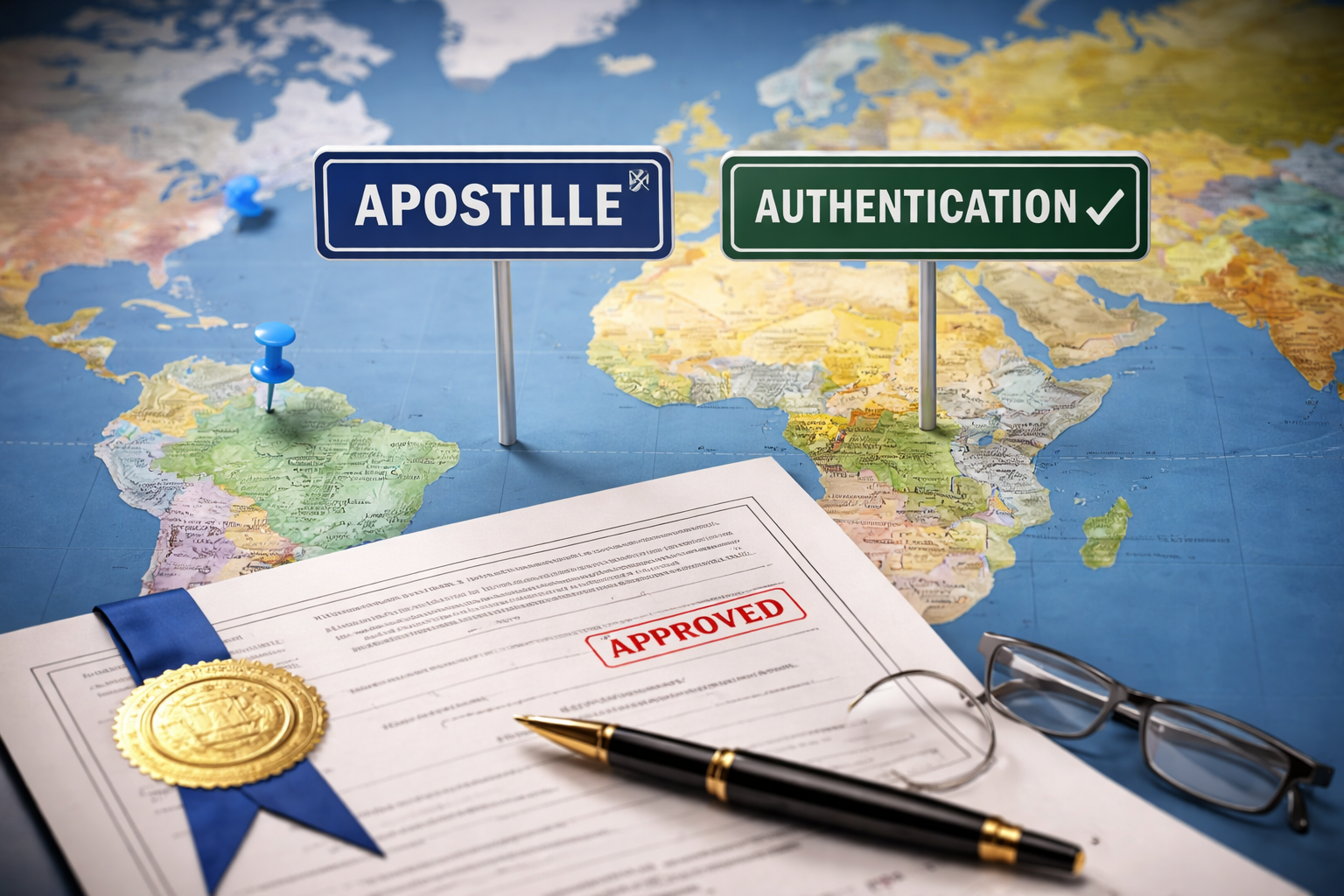
An apostille is an official certificate that verifies the authenticity of a document for use in one of the 120+ countries that are members of the Hague Apostille Convention. It confirms that the signature, seal, or stamp on the document is genuine, ensuring it will be recognized and accepted internationally without additional legalization.
So let’s break it down.
It All Depends on the Destination Country
When a document is being used outside the United States, it must be certified so the receiving country can trust its authenticity.
Whether you need an apostille or authentication depends entirely on whether the country is part of the Hague Apostille Convention.
What Is an Apostille?
An apostille is a certificate issued by a state authority (usually the Secretary of State) that verifies:
The notary’s signature is valid
The public official is properly commissioned
The document is recognized for international use
If the country you’re sending documents to is a member of the Hague Convention, you need an apostille — not authentication.
Apostilles are simple, one-step certifications recognized internationally in Hague Convention countries.
Who Needs an Apostille?
People and organizations across many areas use apostilles. Common examples include:
Individuals sending birth or marriage certificates abroad
Families applying for dual citizenship or visas
Students submitting diplomas or transcripts to schools overseas
Businesses sending contracts, corporate documents, or powers of attorney internationally
In short, anyone who needs U.S. documents recognized abroad in Hague Convention countries should consider an apostille.
What Is Authentication?
If the country is not part of the Hague Convention, the process is called authentication, which is more involved. It often requires multiple steps:
Notarization (if needed)
State certification
U.S. Department of State certification
Embassy or consulate legalization
Because of these extra steps, authentication can take longer and requires careful attention to detail.
Where Most Mistakes Happen
Many issues happen before apostille or authentication — at notarization.
Some documents, like power of attorney, affidavits, or business agreements, require notarization first.
Other official documents, like certified birth certificates, do not.
Submitting the wrong type of certification can result in:
Embassy rejection
Delayed immigration or visa applications
Postponed business transactions
Missed academic deadlines
When documents represent family, education, or business abroad, these delays matter.
Why Professional Guidance Matters
International documentation isn’t just administrative — it often represents:
Family matters abroad
Immigration or dual citizenship
Business expansion overseas
Educational enrollment
Each situation deserves precision. Mistakes can cost weeks or even months.
Final Thoughts
Apostille and authentication serve the same ultimate purpose: validating documents for international use.
But the process depends entirely on the destination country. Choosing the wrong certification can lead to costly delays.
Before sending any document abroad, make sure you know which process applies.
